
Cross-Border Tourism Conclave 2026 Calls for Policy Reforms and Quality Service EnhancementFriday, April 10th, 2026
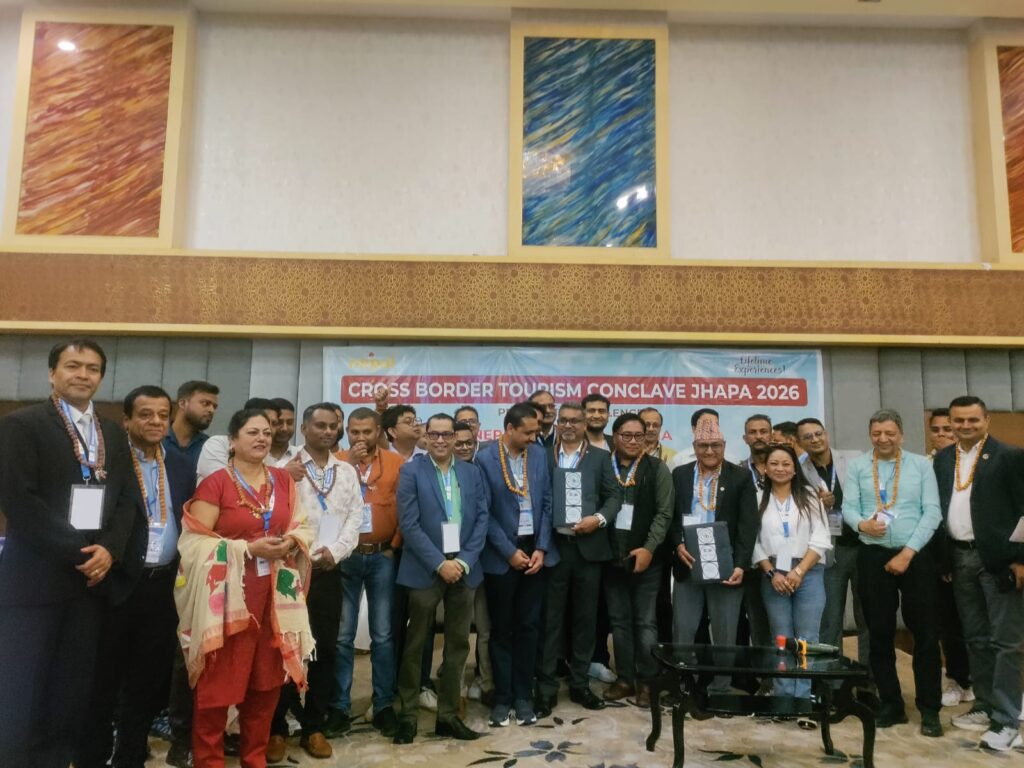
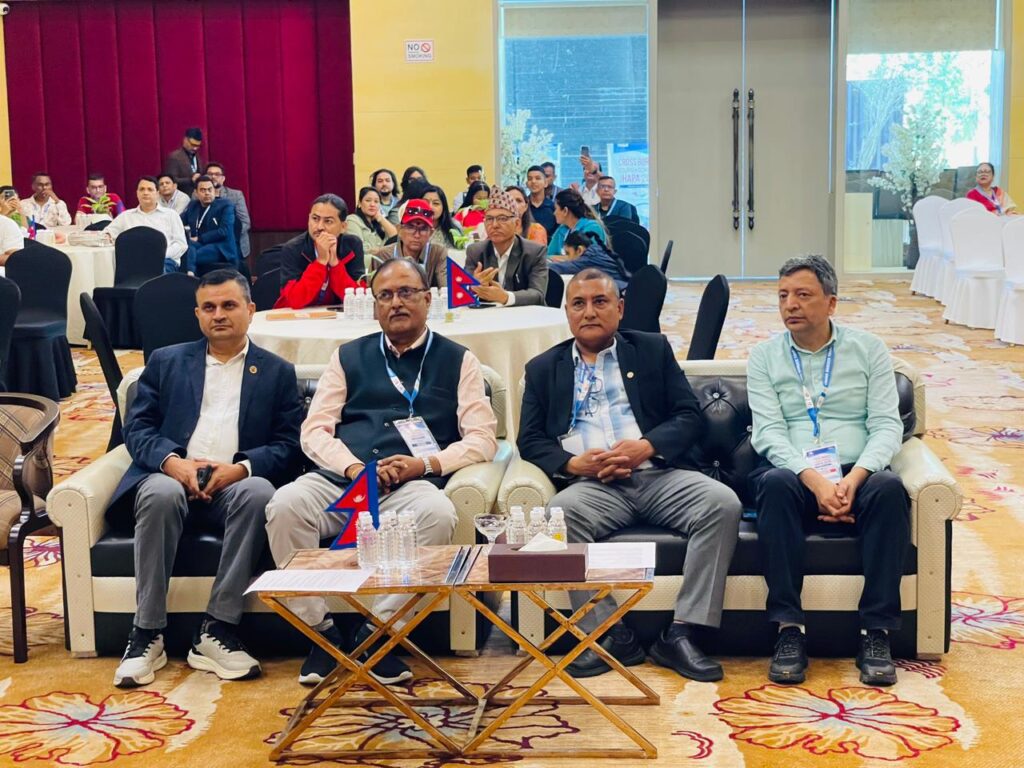
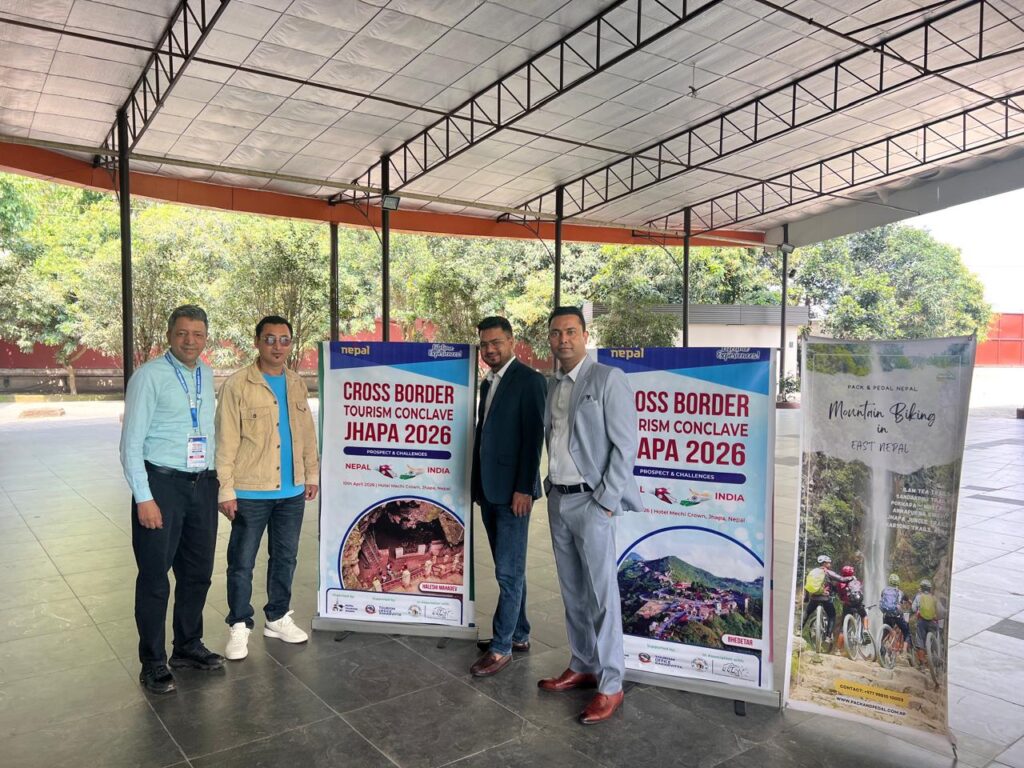
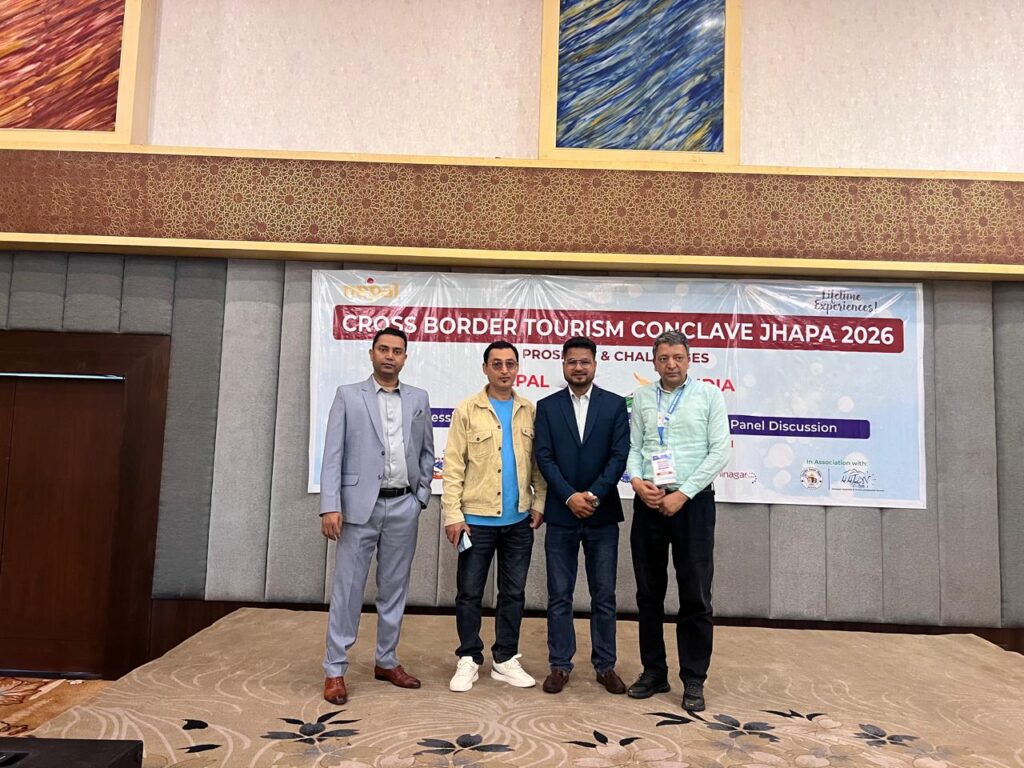
Jhapa: The third edition of the Cross-Border Tourism Conclave Jhapa-2026, jointly organized by the Nepal Tourism Board and the Tourism Office Kakarbhitta, concluded with a strong emphasis on promoting cross-border tourism, advancing policy reforms, and strengthening Nepal–India collaboration. Held on Friday at Hotel Mechi Crown in Jhapa, the conclave brought together policymakers, tourism stakeholders, and industry experts to discuss practical strategies for expanding tourism through improved infrastructure, service quality, and joint market promotion.
Addressing the event, Koshi Province Assembly Member Gopal Tamang highlighted the significant role cross-border tourism has played in promoting the province. However, he expressed concern over the government’s inability to effectively utilize the allocated budget for the Koshi Visit Year campaign. Tamang stressed that positioning Jhapa as a tourism hub would require service improvements, attractive travel packages, and timely policy interventions. He further noted that a shift toward more tourist-friendly attitudes and practices is essential to increasing visitor arrivals.
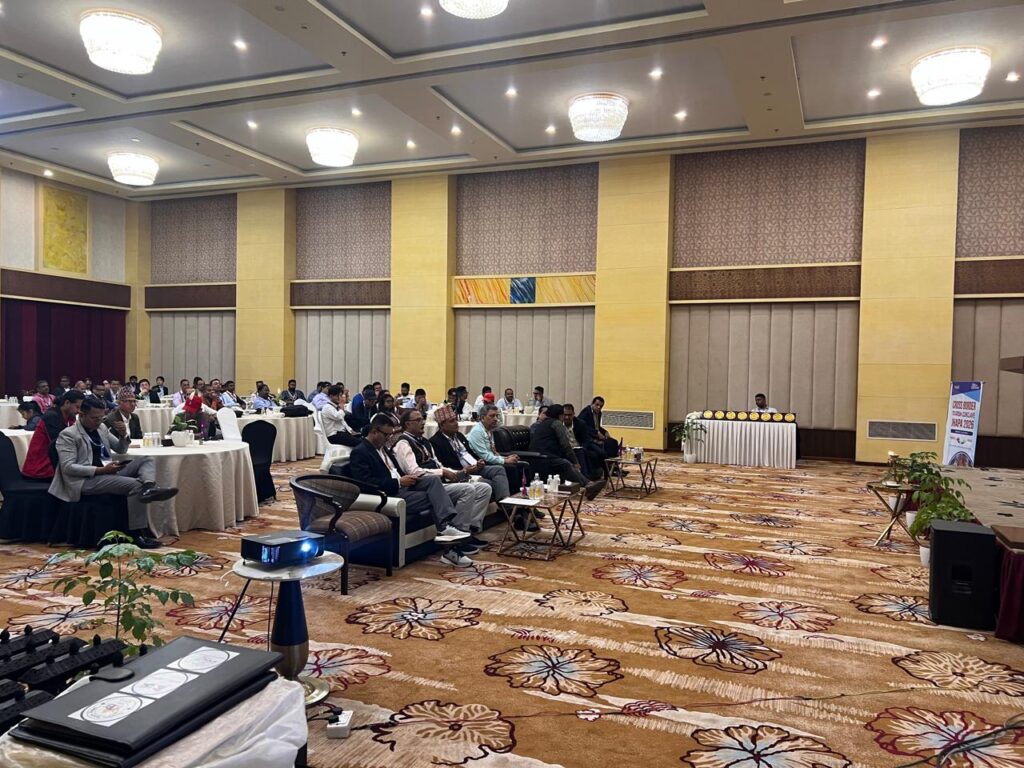
Sunil Sharma, Acting Director at the Nepal Tourism Board, said the continuity of the conclave has contributed to decentralizing tourism activities beyond Kathmandu. He reiterated the Board’s commitment to integrating cross-border tourism into national planning frameworks, including initiatives under the National Planning Commission.
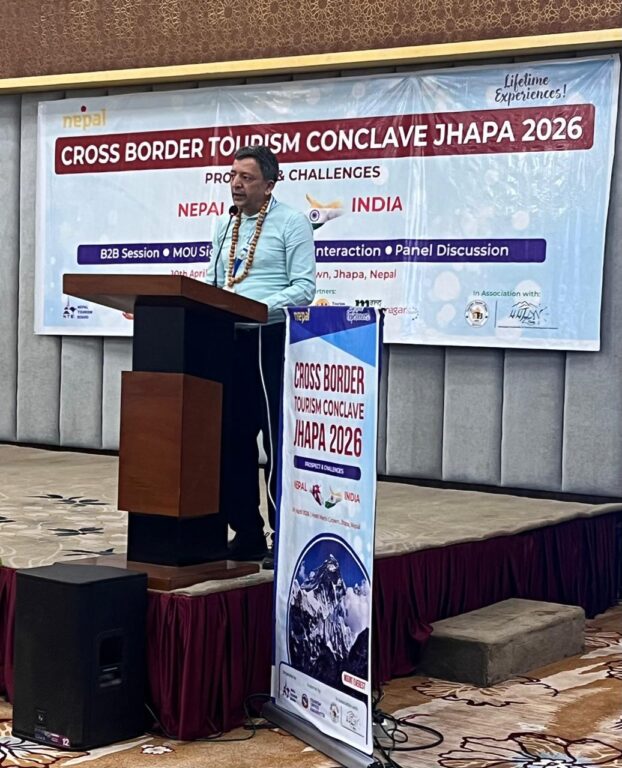
Chief of the Immigration Office Kakarbhitta, Tulsi Bhattarai, assured that efforts are ongoing to facilitate smoother border movement. He noted that immigration services operate daily from 7 a.m. to 7 p.m. and shared recent figures indicating that 1,005 foreign tourists entered Nepal via the Kakarbhitta border in the month of Falgun alone. From Shrawan to Falgun, a total of 6,791 foreign visitors were recorded, with expectations of reaching 9,000 by the end of the current fiscal year. Bhattarai also encouraged Indian tour operators to route more international tourists into Nepal.
Welcome delegates from India and Nepal, Senior Manager at the Nepal Tourism Board, Surya Thapaliya, acknowledged that Nepal has been slow to recognize the full potential of cross-border tourism. He underscored the importance of collaboration and coordination among stakeholders, noting that Indian tourists remain Nepal’s largest source market, with annual arrivals estimated to exceed three million—though precise figures are difficult to capture due to the open border. Thapaliya emphasized the need for more tourist-friendly behavior, streamlined mobility, and improved service delivery to fully capitalize on this potential, along with stronger promotion of destinations outside Kathmandu, including those in Koshi Province.
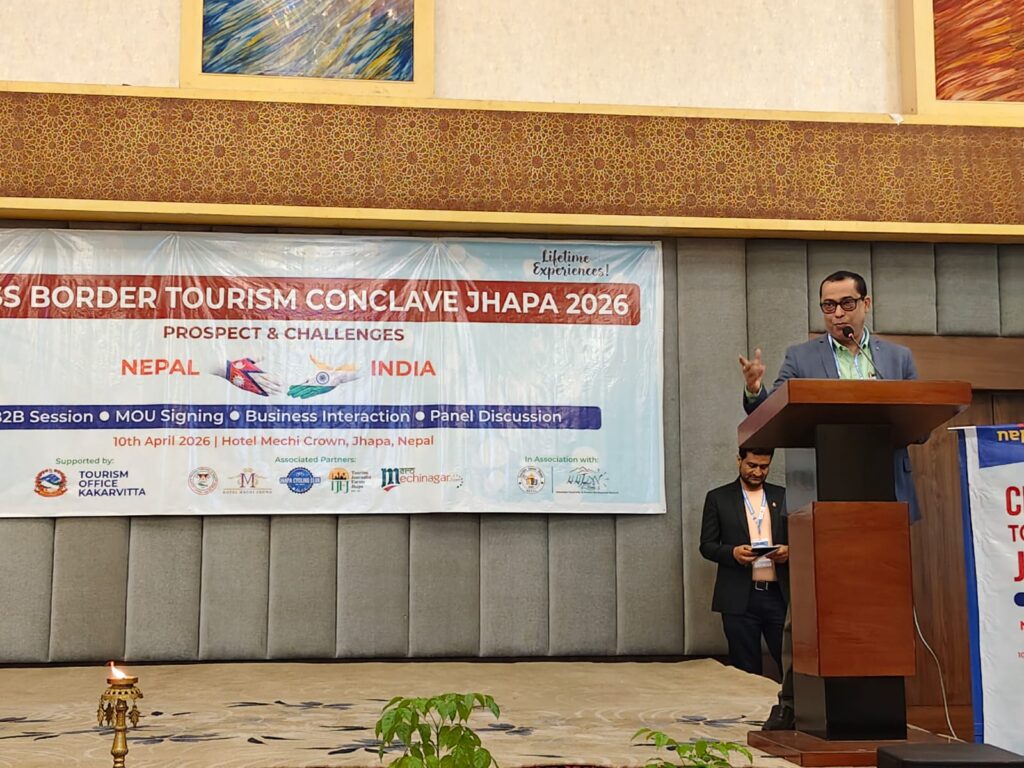
Samrat Sanjyal, General Secretary of the Himalayan Hospitality and Tourism Development Network (HHTDN), called for the joint development of tourism products between Nepal and India. He observed that over the past decade, the two countries have rarely promoted themselves together in international forums, with the conclave being a rare exception. Sanjyal urged both governments to remove policy barriers, ease cross-border movement, and work collectively toward tourism-friendly policies, stressing that the time calls for unity and coordinated advocacy.
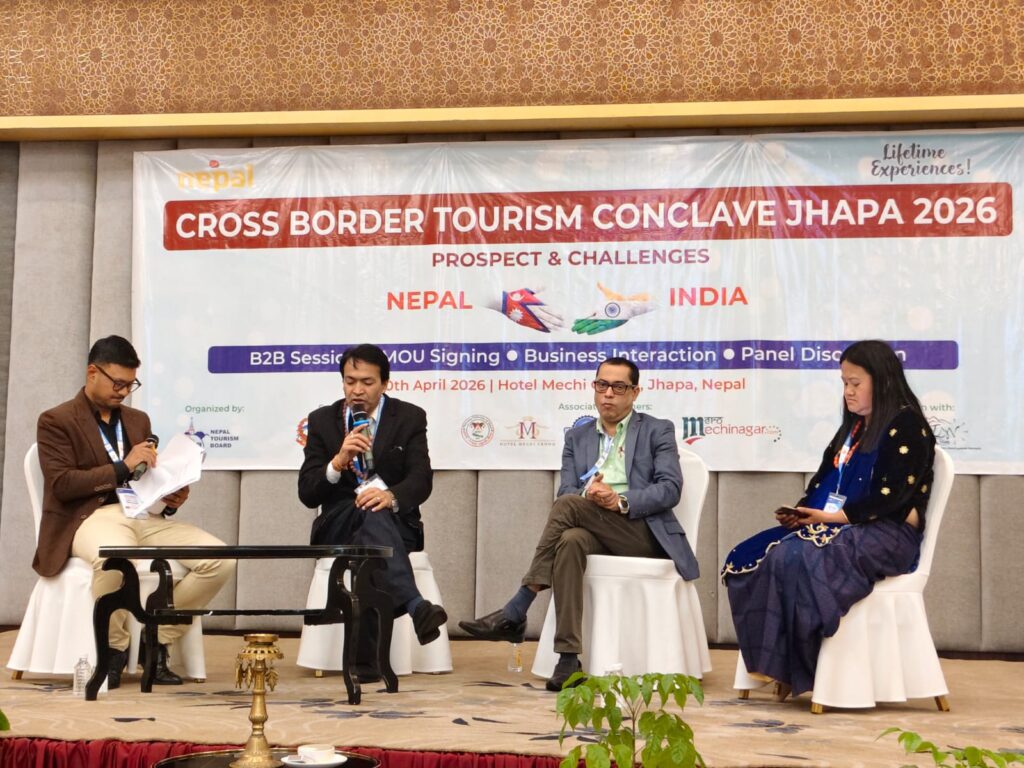
President of the Federation of Nepalese Chambers of Commerce and Industry (Koshi Province), Rishiraj Timilsina, stated that the conclave has had a positive impact on regional tourism development over the past three years. He highlighted the need for innovative travel packages to extend tourist stays and noted growing investment from the private sector in the tourism industry.
The event also featured video presentations showcasing tourism potential in Bihar, Sikkim, and West Bengal in India, alongside destinations in Nepal’s Koshi Province. An interactive session titled “Cross-Border Tourism: Opportunities and Challenges” brought together experts including Surya Thapaliya, Samrat Sanjyal, and tourism entrepreneur Kesari Gurung. Discussions focused on structural, policy, and infrastructure-related aspects of cross-border tourism.
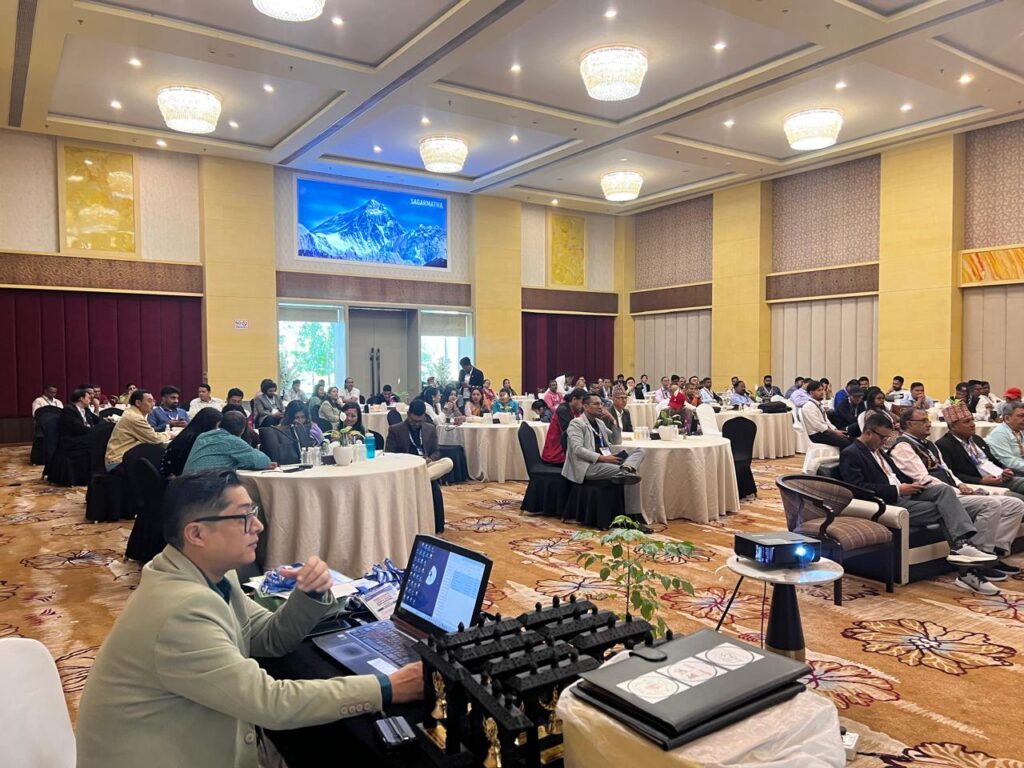
Participants identified the under-construction Asian Highway network as a potential “game changer” for enhancing regional connectivity, expressing confidence that its effective utilization could significantly boost tourism flows between Nepal and India. Speakers also stressed the need to simplify tax and fee payment systems through a single-window mechanism, streamline border checks, and ensure consistency in service delivery. Expanding road networks, improving infrastructure quality, adopting digital systems, and fostering a more tourist-friendly environment were highlighted as key priorities.
During the conclave, a bilateral Memorandum of Understanding (MoU) was signed and exchanged between Tourism Network Jhapa and HHTDN India, aimed at promoting destinations in both countries and advancing sustainable tourism development. The agreement outlines cooperation in regional tourism promotion, expansion of cross-border tourism, exchange programs, and joint efforts toward policy reform.
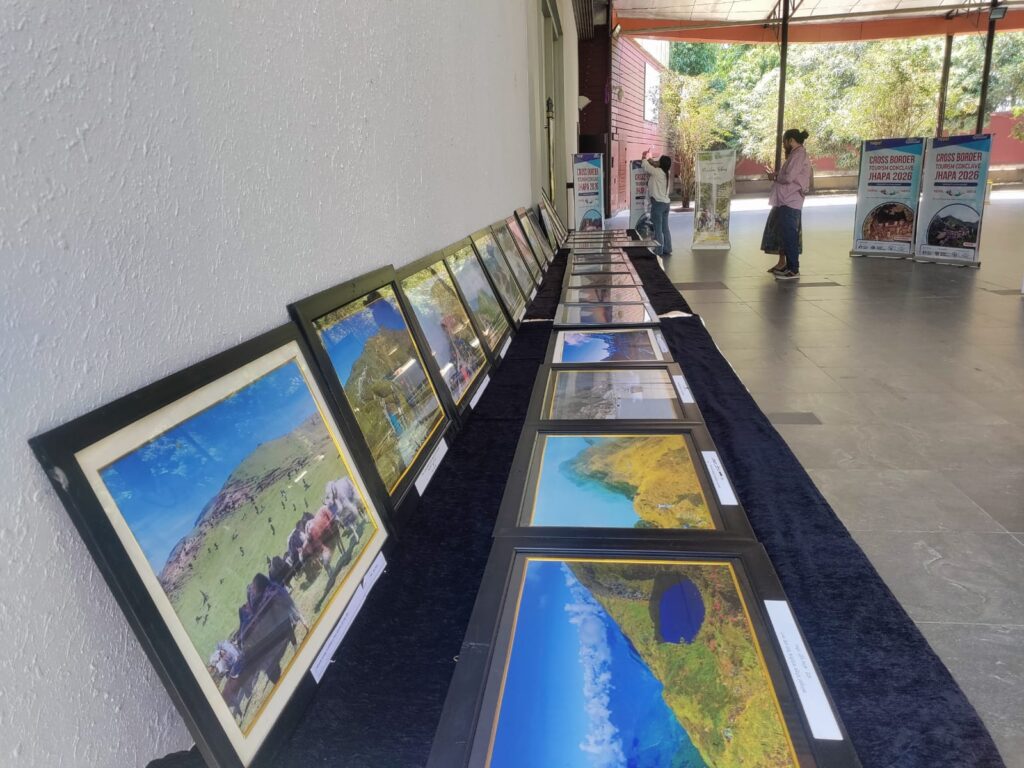
The conclave saw participation from 60 tourism entrepreneurs from India and also featured a photo exhibition highlighting key tourist destinations of Koshi Province, further underscoring the region’s growing potential as a cross-border tourism hub.


Download
Photos / Maps / Brochure ...- • CustomGallery
- • Visa Recommendation
- • Protocol
- • NTB bylaws and procedure
- • Enlistment Files
- • Placemat Designs
- • COVID-19 Safety & Hygiene Protocol for Tourism Industry
- • Forms
- • Curriculum & References
- • Booklets / Brochures
- • Logo
- • Map
- • Mountaineering in Nepal
- • Multimedia
- • Nepal Tourism Statistics
- • NTB Budget
- • Photos
- • Presentation / Documentaries / Montage